West Lake Hills Lot Size and Home Value: How Slope Shapes Buildable Value
The call usually comes after the survey. A buyer has fallen for a half-acre lot in West Lake Hills, run the numbers on a comfortable family home, and assumed the math works the way it would almost anywhere else in Austin: more land, more house. Then the civil engineer comes back with a buildable envelope that's a fraction of what the acreage implied, and the conversation shifts from floor plans to whether the deal still makes sense.
This isn't a fluke of one difficult lot. It's how West Lake Hills is built.
West Lake Hills is its own incorporated city, separate from Austin, with its own building and development department and its own code of ordinances. Most buyers who've done even light homework know the headline rule: the City of West Lake Hills caps residential lots of half an acre or larger at 25 percent impervious cover under its code. Roof, driveway, patio, pool deck. Add it up, divide by lot size, stay under a quarter.
As the Austin American-Statesman reported, 25 percent isn't a flat number. It's a ceiling that only applies at or near zero slope. The city's drainage standards scale the allowance down as the land gets steeper. On flatter ground, the full square footage of the lot counts toward that 25 percent allowance. Once a portion of the property climbs into moderate slope, roughly 15 to 25 percent grade, only about 80 percent of that area counts. Keep climbing and the usable share keeps shrinking, until land at or above roughly 50 percent slope contributes essentially nothing to your allowance unless you earn it back through drainage mitigation, an on-site detention pond, or by preserving other portions of the lot undisturbed.
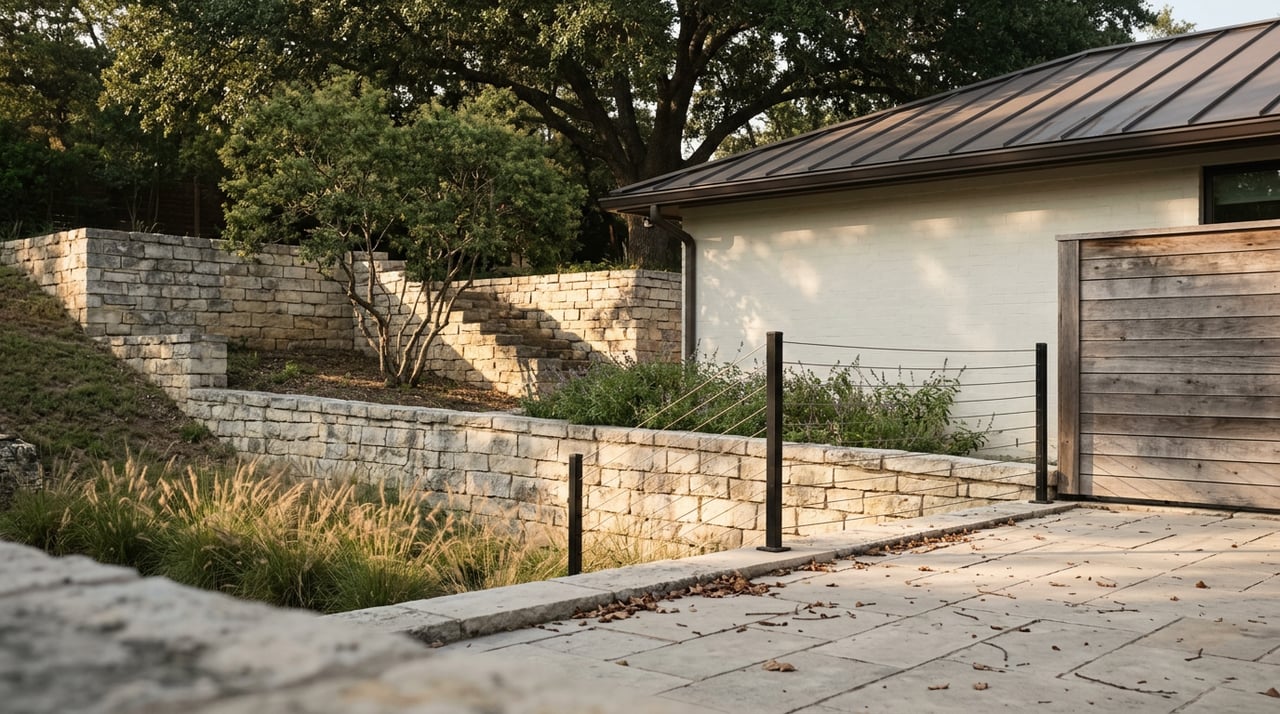
Which means two half-acre lots in the same zip code, both technically compliant with the same 25 percent cap, can support wildly different homes depending on how the land sits. A gently rolling lot might genuinely deliver most of what a buyer pictures. A lot with a steep drop toward a creek or a ravine, the kind of terrain that gives West Lake Hills its hillside character in the first place, might only unlock a fraction of that footprint before triggering a variance request or a redesign.
This is the piece that doesn't show up in a listing description. Acreage does. Slope math doesn't, at least not until an architect or engineer runs it against the actual survey.
Once you see the slope calculation, a pattern in how West Lake Hills homes get valued starts to make more sense. The city has almost no vacant, unbuilt land left. New construction here happens almost entirely on teardown lots, older houses purchased primarily for the land underneath them. An established home from the 1970s, 80s, or 90s sitting on a large, treed parcel is frequently priced and negotiated as land first, house second. The structure on top is often treated as a placeholder, sometimes even a liability if it complicates the site plan.
That land-first logic only works if the land itself delivers a real buildable envelope. A large, gently sloped lot with confirmed capacity for a substantial footprint justifies a premium, because a buyer can walk in, get a survey, and build with confidence. A large lot on difficult terrain, where the slope-adjusted math eats into that 25 percent allowance, is worth less than the acreage alone suggests, even if it looks identical on paper.
Buyers relocating from cities with more conventional permitting, where you pull a permit and go, are the ones most often caught off guard. West Lake Hills runs its own process, separate from Austin's, and the timeline to get a project approved tends to run longer than newcomers expect. The buyers who navigate this well get a survey and a topographic study done, and have an architect run the actual impervious cover math against the slope, before they fall in love with a lot or write an offer on a teardown.
Here's where the slope math connects to something buyers see every day: the median price. In August 2026, homes in West Lake Hills sold for a median price of $2,974,500, with properties spending an average of 73 days on the market compared with 68 days the year before. Twenty-two homes sold that month, versus 23 during the same month a year earlier.
Twenty-two closings is not a large sample. In a market this size, one or two unusually large estate sales, or one or two lots that sold well under value because of a difficult buildable envelope, can swing the median by hundreds of thousands of dollars in either direction. That's part of why different data sources covering West Lake Hills in the same general period can show median figures that look nothing alike. The number itself isn't unreliable so much as it's noisy, a natural consequence of a small, geographically constrained city, only about four square miles, hemmed in by the Colorado River and the surrounding hill country terrain, where there simply aren't enough transactions in any given month to smooth out the swings.
The practical takeaway isn't to distrust the median. It's to treat it as a weather report, not a forecast for your specific lot. The more durable predictor of what a property is actually worth is the one that doesn't move month to month: how much of that lot's square footage the slope actually lets you use.
The slight lengthening in average days on market, 73 days this August versus 68 a year ago, is consistent with what that dynamic would produce. A home with a confirmed, generous buildable envelope and a straightforward site plan is a known quantity, and known quantities move. A home marketed on acreage alone, without anyone having run the slope-adjusted numbers, asks a buyer to take that uncertainty on faith, and buyers in this price range increasingly don't.
If you're selling an older home on a large lot, the instinct is to lead with the acreage. The stronger move is to have the buildable envelope calculation done before you list, so your marketing can say what a buyer's own engineer will eventually confirm anyway. A lot that's already been vetted removes the single biggest source of buyer hesitation in this market.
If you're buying with a teardown or a major remodel in mind, the sequence matters. Get the topographic survey. Have someone run the slope-tiered impervious cover math against the city's actual code, not a generic percentage. Ask whether the property is on central wastewater, since smaller lots connected to central sewer service can qualify for an impervious cover bonus beyond the base allowance. And ask early enough that the answer can still change your offer, not just your architect's mood.
Is West Lake Hills part of the City of Austin? No. It's a separate, incorporated city with its own government, police department, and building and development department. Permits and variances go through West Lake Hills directly, not Austin.
Does a bigger lot always mean a bigger house here? Not automatically. The 25 percent impervious cover cap applies to the portion of the lot the city's slope-based calculation actually counts, so steeper terrain can reduce the usable share well below the raw acreage.
Why do different sources show different median home prices for West Lake Hills in the same general period? Sales volume here is low enough, often only a couple dozen closings a month, that a handful of unusually high or low sales can shift the median significantly depending on the exact window a source is measuring.
West Lake Hills rewards buyers and sellers who do the site-specific homework before the acreage becomes the headline. If you're weighing a purchase, a remodel, or the right time to list a property here, Grimes Group Austin can walk the lot with you, connect you with the right engineer, and help you separate what the land actually supports from what the listing sheet implies. Request a Confidential Home Valuation to start with a clear-eyed read on where your property stands today.
This article is general information, not legal, tax or financial advice. Consult a qualified professional about your situation.
Stay up to date on the latest real estate trends.