Buying Waterfront on Lake Travis: What Smart Buyers Check

Waterfront on Lake Travis can be stunning, but buying here takes more than falling in love with a view. Because Lake Travis is a variable-level lake, the property that looks perfect on showing day may function very differently when water levels rise or fall. If you are thinking about buying waterfront property on Lake Travis, this guide will help you focus on what really matters: access, rules, costs, and the due diligence steps that can protect your investment. Let’s dive in.
Lake Travis is not a constant-level lake, and that shapes the entire waterfront buying process. The Lower Colorado River Authority says the lake is considered full at 681 feet above sea level and can also hold significant flood storage.
As of May 3, 2026, LCRA reported Lake Travis at 664.15 feet, which is 16.85 feet below full pool and below the monthly average of 668.72 feet. LCRA also notes the lakes were last full in July 2019, which is an important reminder that you should evaluate a waterfront property based on changing conditions, not just one moment in time.
For buyers, that means waterfront value is not only about scenery. It is also about whether you can realistically access the water, use a dock, launch a boat, and enjoy the shoreline as lake levels move.
A beautiful water view and true functional waterfront are not always the same thing. On Lake Travis, you want to know whether the lot offers deeded waterfront, usable shoreline, and reliable access at different lake levels.
Research on waterfront values consistently shows that factors like lakefront location, distance to water, scenic view, and dockability can affect sale price. One study cited in the research found a significant premium for dock access compared with properties that could not support a dock.
That is why a smart buyer asks practical questions early. A property may look like a waterfront opportunity online, but the real value often comes down to how usable the shoreline is.
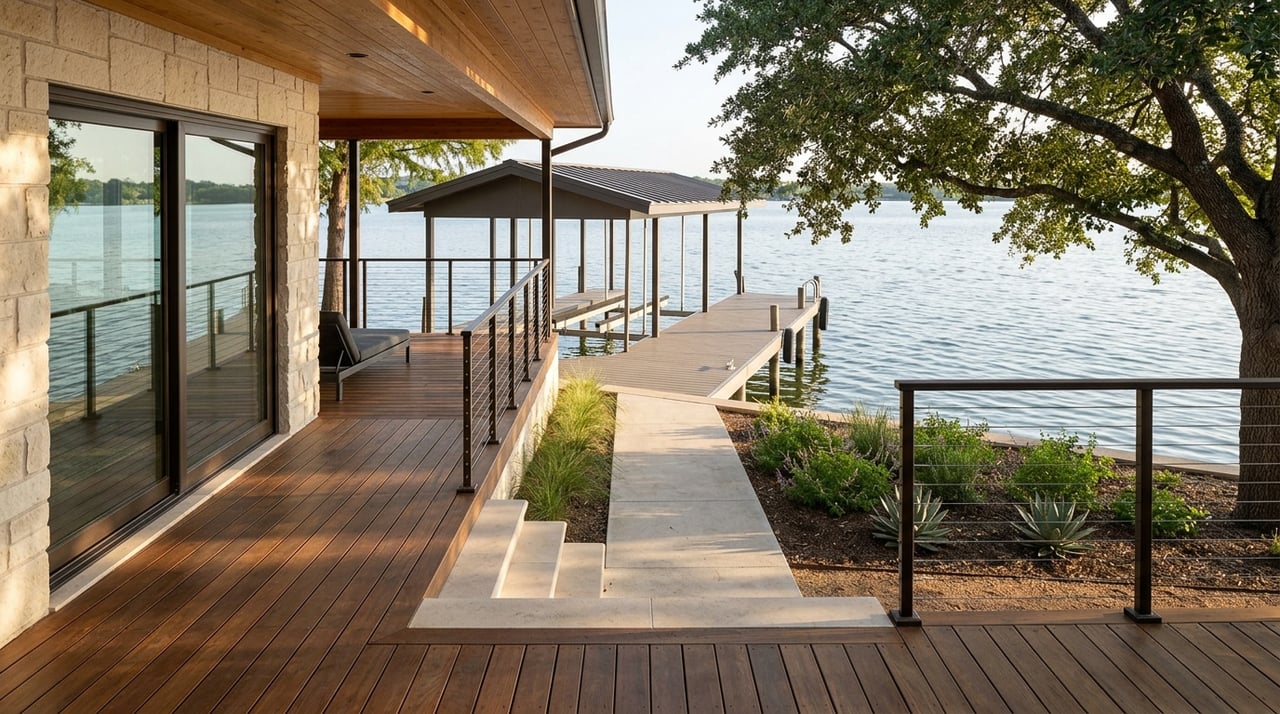
On Lake Travis, a residential dock is a regulated improvement, not just a bonus feature. LCRA says residential boat docks must meet safety standards related to flotation, lighting, access, anchoring, and distance from shore.
LCRA does not require a permit, registration, or fees for residential docks of 1,500 square feet or less, but those docks still must comply with LCRA standards. Lake Travis docks may extend up to 100 feet from shore, and a cove must have at least 40 feet of additional lake access.
Some buyers assume that if a dock is already there, everything is fine. That is not always the case. You should verify compliance, maintenance history, and whether the shoreline is even suitable for a dock under current rules.
Dock rights are tied to more than the visible structure. LCRA says property owners must own or have permission to use submerged land under fixed docks and underwater areas used for floating-dock anchors.
This point matters if a dock sits close to a side boundary or appears to extend into an area that may affect another owner’s rights. LCRA also states that it will not resolve private property-rights disputes, so buyers should not rely on assumptions.
A current survey, title review, and any available permit or approval history are especially important when a dock or shoreline improvement appears close to a property line. This is one of the most important due diligence steps for a Lake Travis waterfront purchase.
Not all water access works the same way, even within the same neighborhood. A private dock, a shared HOA dock, and a marina slip each come with different rules, rights, and risks.
LCRA requires permits for all marinas on Lake Travis, and its marina ordinance also applies to floating docks over 1,500 square feet. The 2023 update banned new community marinas, which makes existing access arrangements worth verifying carefully.
If a seller says a boat slip, HOA dock, or marina arrangement is available, confirm the details directly. You want to know whether the access is truly transferable, currently usable, and subject to any private restrictions or recurring fees.
Low lake levels can expose more shoreline and lakebed than buyers expect. At the current lake level of 664.15 feet, Lake Travis is below LCRA’s 676-foot threshold for certain lakebed-clearing notifications.
LCRA explains that fluctuating levels can create exposed lakebed and shoreline vegetation that becomes a nuisance at low water. If a property has retaining walls, bulkheads, shoreline clearing, or plans for a major remodel, it is wise to verify those improvements before closing.
LCRA’s watershed rules can also apply to projects in parts of the Lake Travis watershed, including some projects that create more than 10,000 square feet of impervious cover or disturb more than 1 acre. Depending on the address, local governments such as Austin, Bee Cave, Lakeway, Lago Vista, Volente, or Travis County may administer part or all of the program.
One of the most important things to confirm is which jurisdiction governs the property. Around Lake Travis, rules can vary by exact address, even within the same general area.
That matters for permits, watershed oversight, and short-term rental rules. A home in Austin may face different requirements than a home in Lakeway, another city, or an area outside city limits.
For example, Austin regulates short-term rentals of fewer than 30 consecutive days through a city licensing system. Austin also states that properties in the ETJ do not need a license or local hotel occupancy tax, while properties in limited-purpose jurisdiction still need a license.
Lakeway is more restrictive than many buyers expect. The city maintains a short-term-rental waiting list for single-family properties, says the form does not guarantee approval, and handles condominiums separately.
Lakeway’s ordinance also states that no permit may be issued if deed restrictions or HOA rules prohibit short-term rental use. Permits are non-transferable, and operating rules include parking, occupancy, minimum stay, nuisance, and recordkeeping requirements.
Flood risk is part of waterfront ownership, and it should be reviewed early in the process. FEMA states that flood insurance is separate from homeowners insurance and that most homeowners policies do not cover flood damage.
FEMA also says National Flood Insurance Program policies typically have a 30-day waiting period. For that reason, buyers should review flood maps and speak with the local floodplain administrator before closing, especially if the property’s elevation is close to the lake or in a flood-prone area.
This is not just a box to check for insurance. Flood exposure can affect your monthly costs, your renovation plans, and your long-term comfort with the property.
Not every Lake Travis waterfront home is on sewer. If a property is served by an on-site sewage facility, that system deserves close attention during due diligence.
LCRA’s On-Site Sewage Facilities program regulates systems within a 2,000-foot zone around Lake Travis. LCRA says an inspection is required before it can approve continued use after a transfer of ownership.
That makes septic permits, service history, and inspection timing very important. If you are under contract on a waterfront home, this is not something to leave until the last minute.
The purchase price is only part of the waterfront equation. Lake Travis buyers should also look at the recurring costs tied to access, maintenance, and compliance.
Depending on the property, those costs may include HOA dues, marina fees, dock maintenance, septic service, flood insurance, and future shoreline work. A waterfront home can be an exceptional lifestyle purchase, but it helps to understand the full carrying cost before you commit.
If you want a simpler way to evaluate a property, start here:
Buying waterfront property on Lake Travis can be incredibly rewarding when you go in with clear eyes. The right property is not just beautiful on paper. It works for your lifestyle, holds up under real-world lake conditions, and comes with verified access and manageable ownership obligations.
If you are considering a Lake Travis waterfront purchase and want strategic, property-specific guidance, David Grimes can help you evaluate the details that matter before you buy.
Stay up to date on the latest real estate trends.