Rollingwood New Construction Lots and Build Potential
If you are looking at a Rollingwood property and wondering whether the real value is in the house, the lot, or the future build potential, you are asking the right question. In a city that is already largely built out, teardown and redevelopment decisions are rarely simple. The good news is that with the right lens, you can quickly see which properties may suit a renovation, which may justify a rebuild, and which may be best held as-is. Let’s dive in.
Rollingwood is not a blank-slate market. According to the city’s comprehensive plan, single-family residential use makes up 69.4% of land use, while vacant parcels account for just 1.7% of total land area.
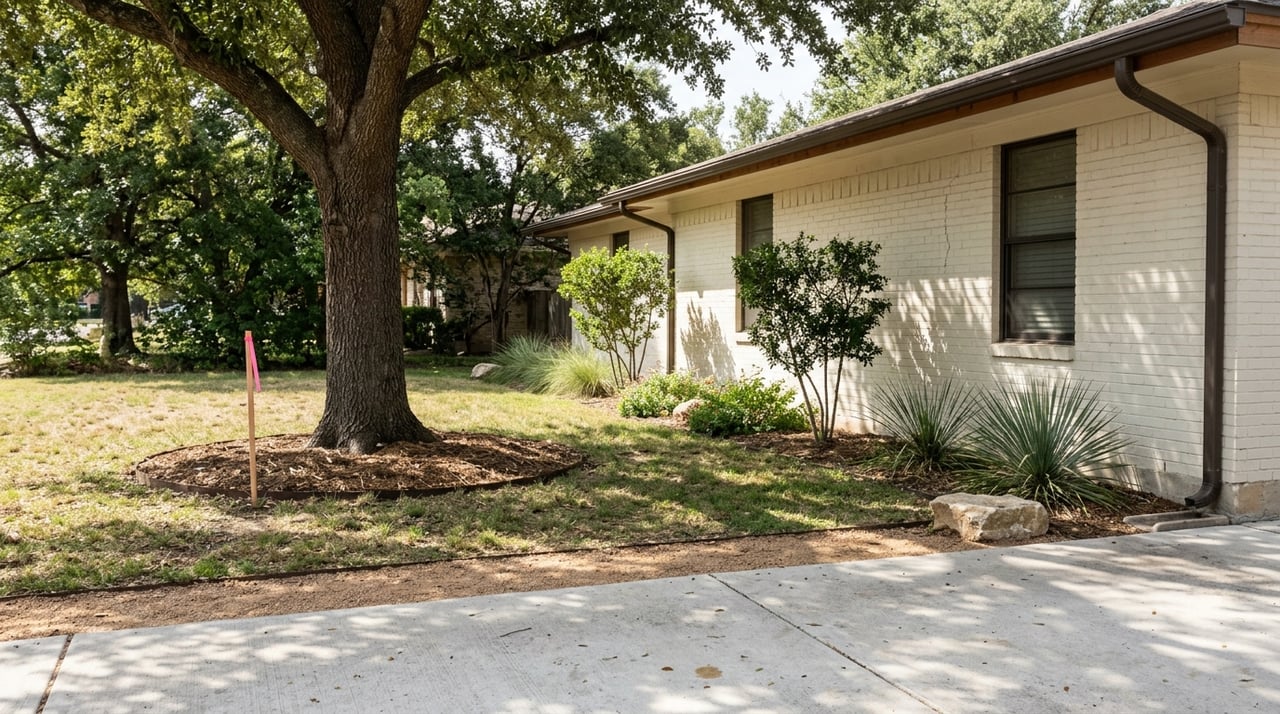
That matters because most opportunities here are not true vacant-lot plays. Instead, they tend to be older homes on established lots, where your decision often comes down to remodel versus teardown versus hold.
The same plan also reflects a strong community preference for a low-density, tree-filled setting that stays close to current home-size rules. For you as a buyer or seller, that means redevelopment potential exists, but it is shaped by local rules, mature trees, and a built-out neighborhood pattern.
When you evaluate new construction potential in Rollingwood, the lot usually tells the story first. The city’s residential zoning standards set a relatively tight envelope that can sharply affect what is realistic.
In Rollingwood’s residential district, a lot must be at least 15,000 square feet. Each dwelling must contain at least 1,800 square feet, and if the home is two stories, at least 1,000 square feet must be on the ground floor.
Setbacks also matter early in the process. The required yards are 30 feet in front, 20 feet in the rear, and two side yards with a minimum of 10 feet each and 25 feet combined.
Height adds another layer. The maximum height is 35 feet, but the city also applies a sloping height plane, which limits height to 25 feet at 10 feet from the property line and then allows an extra foot of height for each additional foot of horizontal distance until 35 feet is reached at 20 feet from the property line.
A large lot on paper does not always translate into an easy build. Setbacks, side-yard requirements, and the height plane can all reduce your practical design options, especially if you want a wider footprint, a second story, or detached improvements.
That is one reason Rollingwood properties need more than a quick online search and a rough square footage calculation. You need to understand the actual buildable envelope, not just the lot size shown in the listing.
Older homes can complicate this further. Rollingwood allows nonconforming buildings, structures, uses, and lots to continue, but the code also says nonconformities should not be enlarged, expanded, or extended.
For you, that creates an important early due-diligence question: is the parcel a legal lot under current rules, and can the existing structure be improved without pushing the project into a more difficult redevelopment path?
In Rollingwood, a full teardown is not just a major remodel. The city defines new construction to include a project on a vacant lot or on a lot where the existing walls and foundation have been completely demolished and removed.
That distinction matters because new construction triggers a fuller review process. Before a residential permit is issued, the city requires a residential plot plan showing existing and proposed structures, setback lines, easements, and septic information if applicable.
For many projects, that is only the beginning. If the work is a new build, or an addition or remodel that increases the footprint or roof plan, Rollingwood also requires a drainage site plan showing contours, drainage patterns, and any 50-year and 100-year floodplains.
When you compare a teardown to a remodel in Rollingwood, construction cost is only one part of the equation. The city’s permit materials point to several items that can materially affect your budget and timeline.
For new residential construction, the checklist may require a recorded subdivision plat, tax certificate, topographic survey, sedimentation and soil-erosion control plan, tree survey, tree protection plan, and drainage site plan where applicable. New construction, additions, and demolitions may also require compliance with the Texas Commission on Environmental Quality or an exemption because Rollingwood is over the Edwards Aquifer Recharge Zone.
There are also process requirements that many buyers do not expect. The city requires written notice of the permit application to owners within 250 feet for new construction, additions, and exterior remodels.
In addition, new homes and remodels affecting 50% or more of a home’s square footage require a residential fire sprinkler system. If your project comes within five feet of the maximum height, the city also requires height and elevation verification before framing inspection.
In Rollingwood, tree constraints can be just as important as zoning. In many cases, they are the factor that most directly affects whether a teardown makes sense.
The city’s tree ordinance protects all oaks and pecan trees. A protected tree is generally 12 inches diameter at breast height or larger, and a heritage tree is 24 inches diameter at breast height or larger.
Before permits move forward, development applications must include a tree survey and tree protection plan. The code states that no tree removal permit, clearing and grading permit, site development plan, or building permit may be issued until those items are approved.
The survey itself is detailed. It must identify all existing live healthy trees 8 inches diameter at breast height and larger, along with protected and heritage trees, and show each tree’s diameter, location, and species.
Rollingwood also requires 20% of each lot’s total area to be landscaped open space. On top of that, the city requires one tree for each 2,000 square feet of lot area, although qualifying existing trees at least 11 feet high can count if the ground beneath the canopy remains unimproved.
Replacement requirements can add cost if removal is approved. If a protected tree is removed from a required yard, it must be replaced with three replacement trees, and heritage trees have a more demanding replacement ratio.
For you as a buyer or investor, this means survey dimensions alone do not tell the whole story. A lot with mature oaks may have significantly tighter real-world design flexibility than you would assume from lot size alone.
In Rollingwood, the best path is often the one that fits the site rather than the one that sounds most ambitious. A renovation can make sense when the existing structure is sound, the current footprint already uses the lot efficiently, or tree preservation and setbacks leave limited room for a clearly better new design.
A rebuild may be more attractive when the house is functionally obsolete, the lot supports the 15,000-square-foot minimum, the setbacks and height rules are workable, and the likely tree mitigation burden is acceptable. In other words, the best teardown candidates are usually the ones with a clean build envelope after setbacks and tree protection are mapped.
A long-term hold may be the better move when the current improvements already capture much of the site’s permitted value. If the property is serviceable but constrained by mature trees, a legal nonconforming lot, or a tight height and setback envelope, preserving the asset may be more efficient than forcing a rebuild.
Many buyers assume a remodel is always the easier and less expensive choice. In Rollingwood, that is not always true.
Because substantial additions and major remodels can trigger some of the same approvals as new builds, including drainage plans, tree documentation, neighbor notice, and fire sprinklers for larger projects, the cost gap between a serious renovation and a teardown can narrow faster than expected.
That does not mean rebuilding is automatically the better move. It means your decision should be based on the specific lot, tree map, and permit path, not a generic rule of thumb.
If you are buying with redevelopment in mind, focus on a few basics first:
If you are selling a property with teardown or build potential, clear positioning matters. Buyers tend to respond best when they can quickly understand the lot dimensions, likely constraints, and where the opportunity may lie.
That is especially true in a market like Rollingwood, where the most valuable insight is often not just what can be built, but what can be built efficiently within the city’s rules.
If you want a strategic read on whether your Rollingwood property is best marketed as a livable home, a remodel candidate, or a lot with new construction upside, David Grimes can help you evaluate the opportunity with a local, detail-driven approach.
Stay up to date on the latest real estate trends.